
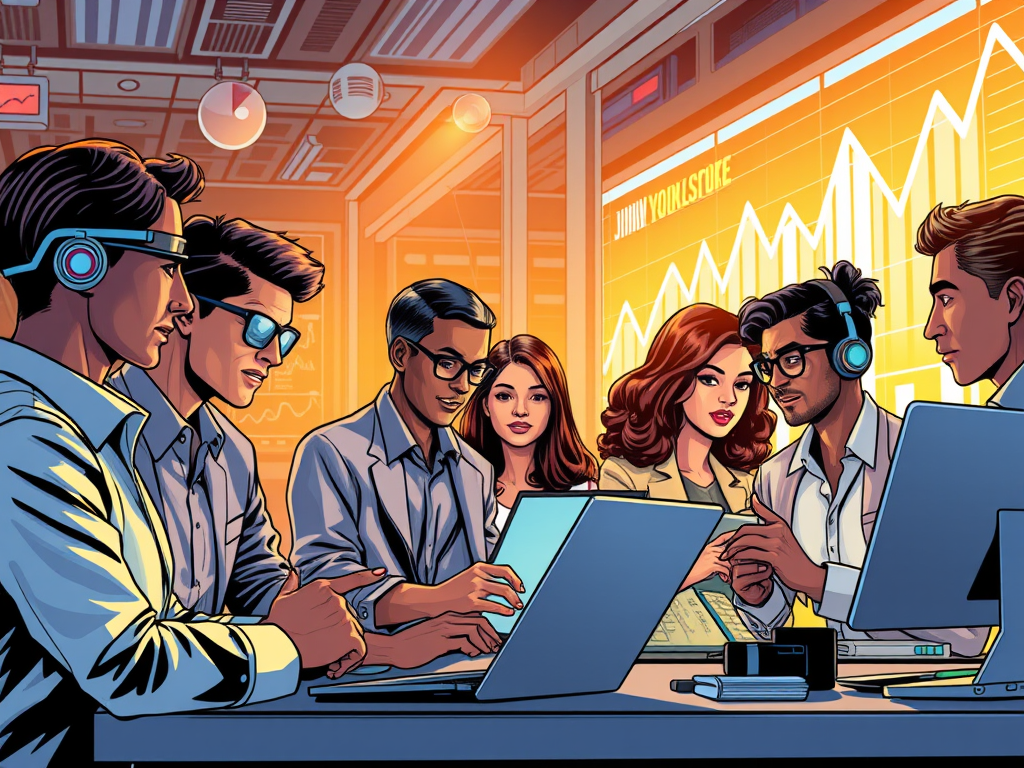
The current job market shows clear signs of becoming extremely unpredictable. Experts show us both excitement and fear when describing future directions in the industry by spending massive amounts of time on research combined with direct conversations. The workforce abilities which secured our current positions cannot sustain our employment moving toward the upcoming decade. But don’t freak out just yet! This document provides extensive guidance to address the career development challenges you will encounter in the rapidly changing employment industry.
The Shifting Landscape of Work
A few decades ago receiving a college degree provided strong assurance of obtaining a satisfactory job. The employment situation has completely changed during the past few generations (I am really disappointed). The modern workplace operates like a shifting beast which keeps workers always balanced on their feet. The rapid changes in work where AI achieves impossible tasks and remote work spreads while industries rise and vanish all around us create an overwhelming situation. According to the World Economic Forum there will be 85 million job losses through human-machine labor division shifts while 97 million new positions are expected to emerge by 2025. The transformation stands as an enormous change according to my analysis.
The Great Skills Reset
The pandemic mixed up our entire operation of employment before turning its power blender to full consistency. The pandemic made valuable abilities prominence skyrocket while turning other competencies into completely worthless assets. Businesses began emphasizing the value of adaptability instead of experience so learning ability surpassed particular technical understanding as the key criterion. Learning ability has replaced knowledge as today’s main professional focus because fast-learning employees achieve better results with real-world applications.
Essential Skills for the Future
Digital Literacy 2.0
Basic computer abilities are a thing of the past because everyone has surpassed them. Modern digital competency includes mastering concepts of artificial intelligence in addition to data handling skills for users of all professions and navigation abilities across complex digital domains. The ability to comprehend modern work systems makes a much bigger difference than software development expertise. Knowledge about the requirements for modern Excel competency struck me as I realized the average level of my skills wasn’t sufficient for today’s career landscape.
Emotional Intelligence and Soft Skills
The growing sophistication of machines in technical operations has caused human abilities to rise in value significantly. Go figure! The present requires work professionals to possess emotional intelligence alongside empathy and effective interpersonal skills because they now represent necessary competencies. The research confirms that hiring managers rate soft skills on a level or higher than technical qualifications when considering new employees. AI currently fails to create the fundamental human-based understanding and emotional connection which remain beyond its capabilities.
Emerging Technologies You Can’t Ignore
Artificial Intelligence and Machine Learning
AI’s ability to make jobs redundant fears people while employers want employees to understand AI-related working methods as much as they desire computer literacy in today’s world. No one needs to become a professional in AI engineering yet everyone should learn basic concepts and applications related to this field within their work environment. The workshop I participated in recently introduced me to AI tools which proved amazing when properly applied because these tools dramatically reduce work hours.
Blockchain and Decentralized Systems
Blockchains impose revolutionary changes on supply chain management alongside healthcare record protection irrespective of personal cryptocurrency involvement. These distributed systems have developed new opportunities which expand across different industrial sectors. My initial doubts (shared by most people) faded away when I witnessed these technologies being implemented in practical uses which confirmed their lasting impact.
Adaptability and Continuous Learning
The adaptability section stands as the most essential part in this essay. Technical skills now have reduced life expectancies as knowledge from two years ago may become obsolete in modern times. Developing individual learning tactics amounts to mandatory practice to prosper in contemporary employment markets. I make it a routine to dedicate at least five hours per week to learning new concepts regardless of the learning method between online sessions or books and podcasts.
Building a Learning Mindset
Proficiency in the learning process requires more than getting new qualifications because it demands the correct mind-set to support perpetual learning activities. You need to master unsteady moments together with recognising failure as part of learning advancement while maintaining curiosity about field-related advancements. Now I eagerly welcome beginner status because this stage demonstrates that I continue expanding my knowledge base.
Industry-Specific Considerations
Healthcare and Biotech
Healthcare industry transformation sweeps the field because telemedicine and AI-assisted diagnostics and personalized medicine have become the main drivers of change. The two most valuable skills for healthcare professionals now are digital health expertise with data evaluation capabilities. The combination between healthcare and technology develops future high-demanding career spaces that offer lucrative employment opportunities.
Technology and IT
Within the sphere of technology itself the business environment keeps transforming itself. Full-stack development and cloud computing together with cybersecurity maintain their status as popular areas yet quantum computing and edge computing are quickly capturing more attention. A solid initial foundation combined with adaptive skills will enable you to move toward the emerging technologies in the market.
Creating Your Personal Development Plan
The purpose goes beyond drafting training skills since it requires formulating an organized career enhancement method. To begin your development plan start by evaluating your current situation and your targeted future position and the abilities that separate these points. Split the development plan into achievable sections that match realistic time periods for completion. Consistently reaching targets requires the same mindset as long-distance runs instead of short-term races.
Resources and Tools
Modern times offer unparalleled access to resources which help people develop their skills effectively. MOOCs together with industry certifications offer an endless selection among other options for learning. My three preferred learning platforms consist of Coursera alongside LinkedIn Learning together with complimentary content on YouTube (free education is truly amazing).
Conclusion
The process of making your career resilient to future uncertainties consists of developing adaptability and resilience against whatever arises in the coming years. These skills represent real-world predictions which derive from modern trends and professional workplace forecasts. Learning and adaptation stand as the supreme ability needed to succeed. The combination of change acceptance with curiosity and personal development mindset guarantees long-term career success for someone who has experienced multiple career transitions.
Work in a changing world has unknown features but people can still adapt through preparation. Strong learning aptitude together with key skill development will place you in a position to make the most of upcoming career possibilities. Career future-proofing aims to achieve exactly this goal.




 LekFex